90% of companies THINK their AI is ethical. They’re wrong.

During an AI model review, we uncovered a bias that could have cost us millions in regulatory fines AND our reputation. This was due to a single overlooked part of our AI Governance Framework – the Human Oversight Backstop.

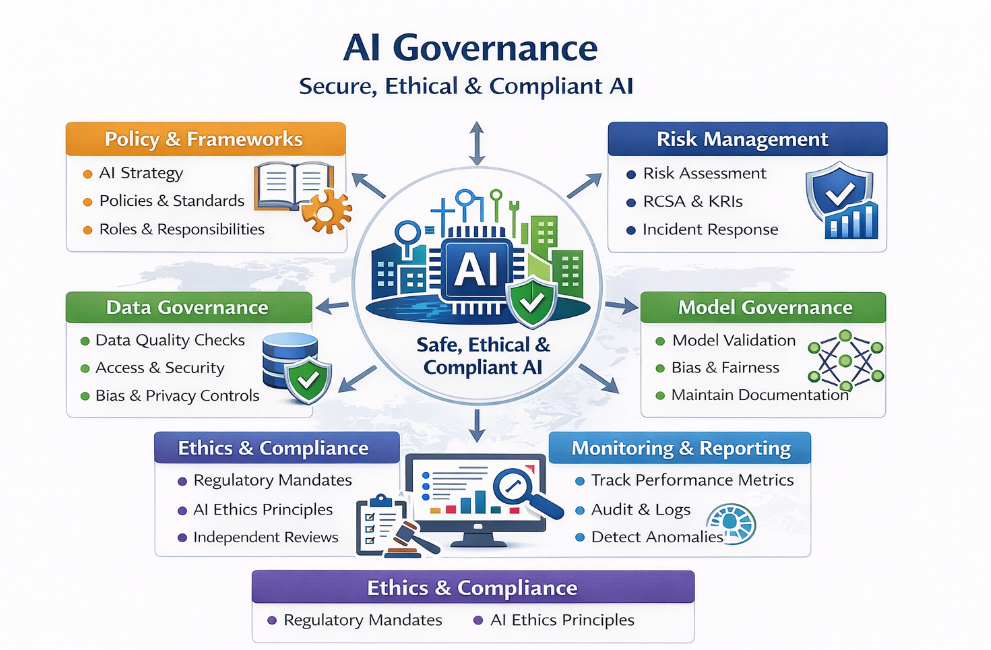
Everyone knows the big 6 pillars of AI Governance: Policy, Risk, Data, Model, Monitoring, Ethics. Critical. Non-negotiable.

But there’s a 7th, often forgotten pillar that acts as the ultimate 'circuit-breaker' for even the most robust AI systems:

The 'Human Oversight Backstop – your pre-defined human intervention points before autonomous AI decisions cause damage. - (Human in the Loop)

Policy & Frameworks: Define AI strategy, policies, roles. (The 'what' and 'who')

Risk Management: Identify & assess AI risks. ({RCSA}, {KRI}). (The 'what if')

Data Governance: Ensure high-quality, secure, unbiased data. (The 'fuel')

Model Governance: Validate, test, monitor accuracy. (The 'engine check')

Monitoring & Reporting: Track performance, compliance. (The 'dashboard')

Ethics & Compliance: Align with {GDPR}, {PCI DSS}, {SOX}, etc. (The 'rules of the road')

The Human Oversight Backstop: When, where, and how humans step in to prevent AI failure or unintended consequences. This isn’t about stopping AI; it’s about making it safer. ( Human in the Loop)

Missing this 7th pillar means you’re running AI systems with a critical vulnerability. It’s the difference between merely good and truly resilient AI.

"Our biggest fear isn't building AI, it's building AI that breaks the law, or worse, ruins a customer's life." message from CEO of a major financial institution.